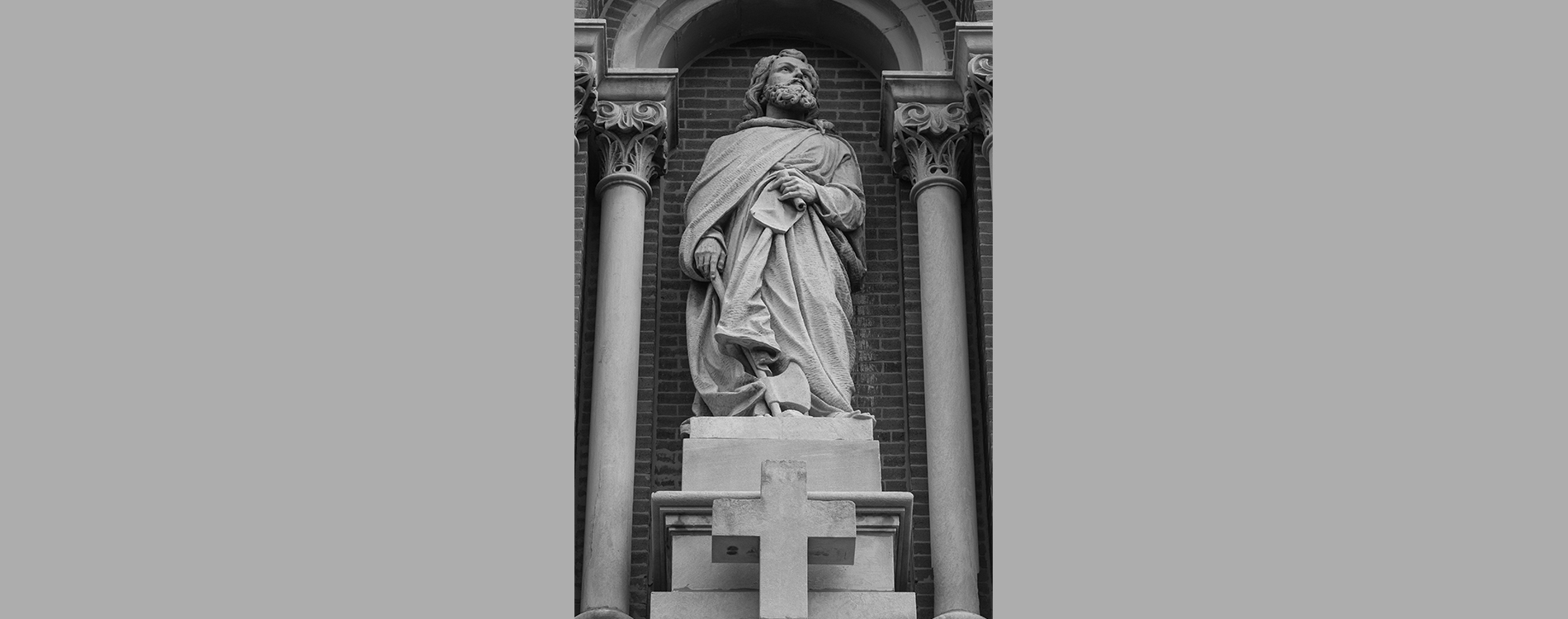
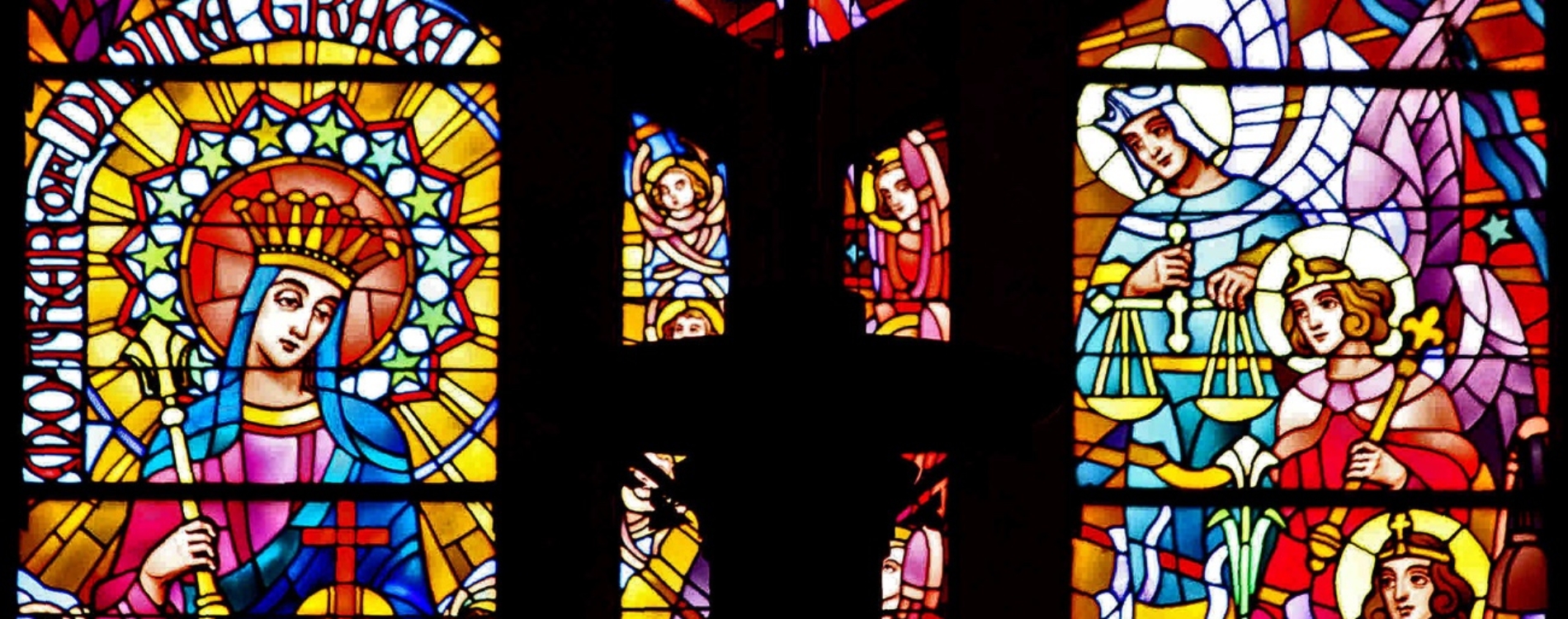
“St. Benedict, Founder of Western Monasticism”
NOTHING IS IMPOSSIBLE WITH GOD
The day before yesterday, July 11, we celebrated the feast day of one of the most important saints in the Church calendar, St. Benedict the Abbot, who is known to us as the founder of Western Monasticism. In about the year 529 he established a monastery at Monte Cassino, where he wrote his well-known Rule of St. Benedict, which is a book of precepts written for the monks who live in communities which follow his spiritual way of life. Through this book he has led many thousands of women and men to a closer relationship with God through a life of discipline and prayer. During the 1500 years of its existence, this Rule has become the leading guide in Western Christianity for monastic living in community, both in Catholicism and (since the time of the Reformation) in the Anglican and Protestant traditions.
Now one might ask, “What does a saint that lived a millennium and a half ago and his Rule have to do with me and my life today?” It is certainly true that we live in a time when monasteries full of monks and nuns are few and far between and the monastic way of life is so foreign to us that we probably hardly ever think of it, if we think of it at all. However, St. Benedict and his way of life do have something to say to us across the ages.
For that reason the Benedictine way of life is still one of the major spiritual disciplines in the Church today. Even the name of the saint speaks of this as Benedict is a Latin name which is rendered “Blessing” in English. One of the important spiritual concepts that St. Benedict taught his followers in his Rule is that of “Ora et Labora”, (Latin for Prayer and Work). With this motto St. Benedict taught his monks to mingle their prayer and their work throughout the day in order to sanctify their work and truly make it a gift to God. His monks follow a strict day order in terms of prayer and work. Their days begin and end with prayer and meditation with a schedule of work in between. They also stop their work several times during the day to pray briefly. In this way they are able to bless their work and offer it to God as a good work done with their own hands.
The concept of “Ora et Labora” can be a very good way for us to bring God into our work throughout our day. Most of us live in a world that is very fast-paced and noisy. It is often filled with distractions which cause us to be impatient and aggravated. Learning to interject a little bit of prayer into our work several times a day can do a lot to give a sense of calm and tranquility in the midst of the turmoil of our lives. We go to Church on Sunday and our work seems so far away, and we go to work on Monday and God seems so far away.
The vast majority of us do not have the luxury during our day to go to a chapel or a church to pray in this way, but we DO have the ability to stop our work for just a few moments several times a day to offer a silent prayer to God wherever we might be. In this way we too can sanctify our work remembering that it is more than just a job that helps us pay our bills, but that what we do truly is “the work of our own hands”, and thus is a pleasing gift that we give to God who in turn is pleased with our offering. Sometimes we are very good at separating God from our everyday life.
One easy way to make Benedict’s concept of “Ora et Labora” is to choose three moments during the day to stop and say a prayer, such as mid-morning, noon and mid-afternoon (9:00-12:00-3:00), or noon, mid-afternoon, evening (12:00-3:00-6:00). The following prayer is one that St. Benedict himself composed, or you can use any other favorite prayer, or just be impromptu and make one up in the silence of your heart. If you like, cut this prayer out and carry in your pocket, purse or wallet to take it out several times during the day.
As we celebrate this feast on St. Benedict let’s hear his invitation to mix and prayer and our work so that we may feel the presence of God in every moment of our lives. May the peace of Christ dwell deeply in us!
Father Tom Lamping
Prayer for the Gifts to Seek God and Live in Him Father, in your goodness grant me the ability to understand you, the perception to discern you, and the reason to appreciate you. In your kindness give me the diligence to look for you, the wisdom to discover you, and the spirit to apprehend you. In your graciousness bestow on me a heart to contemplate you, ears to hear you, eyes to see you, and a tongue to speak of you. In your mercy confer on me a conversation pleasing to you, the patience to wait for you, and the perseverance to long for you. Grant me a perfect end — your holy presence. Amen. — Saint Benedict of Nursia
Are you new to our parish? Welcome! Have you recently moved? May God bless your new home!
CON DIOS NADA ES IMPOSIBLE “San Benedicto (Benito), Fundador de Monasticismo Occidental”
Anteayer, el 11 de Julio, celebramos el santo de uno de los santos más importantes en el calendario de la Iglesia, San Benedicto (Benito) quien es conocido como el fundador del monasticismo occidental. A eso del año 529 estableció un monasterio en Monte Cassino, donde escribió su muy conocida Regla de San Benedicto, el cual es un libro de pautas escrito por los monjes quienes viven en las comunidades que siguen su disciplina de vida espiritual. Através de este libro Benedicto ha guiado miles de mujeres y hombres a una relación más cerca de Dios por una vida de disciplina y oración. Durante los 1500 años de su existencia, esta Regla ha llegado a ser la guía en la Cristianismo Occidental para vivir en comunidad monástica, tanto en el Catolicismo como (desde la Reformación Protestante) en las tradiciones Anglicanas y Protestantes.
Uno puede preguntar, “Qué tiene este santo que vivió desde hace un milenio y medio y su Regla tiene que ver conmigo hoy?” Es cierto que vivimos en un tiempo cuando monasterios llenos de monjes y monjas son muy pocos y que la manera monástica de vivir está lejos de nuestras mentes y pensamos muy poco en ella. No obstante, San Benedicto y su manera de vivir SI tienen algo que enseñarnos através de las edades. Por esta razón la vida Benedictina todavía es una de las disciplinas espirituales mayores en la Iglesia hoy día. Hasta el nombre del santo nos habla de esto porque Benedicto se traduce como “Bendició” en español. Uno de los conceptos espirituales más importantes que San Benedicto les enseñó a sus seguidores por su Regla era el de “Ora et Labora” (que en Latín quiere decir, Oración y Labor). Con esta lema San Benedicto les enseñó a sus monjes a mezclar su oración con su trabajo através del día para santificarlo y hacerlo un regalo para Dios. Sus monjes siguen una orden estricta de oración y trabajo. Sus día empiezan y terminan con la oración y la meditación con un horario de trabajo en medio. También dejan de trabajar varias veces al día para orar brevemente. De esta manera pueden bendecir su trabajo y ofrecérselo a Dios como una obra buena hecha de sus propias manos.
El concepto de “Ora el Labora” puede ser una manera muy buena de traer a Dios a nuestro lugar de trabajo através del día. La mayoría de nosotros vivimos en un mundo que se mueve muy rápido y es muy ruidoso. Muchas veces está lleno de distracciones que nos causan impaciencia y ansiedad. Aprender a injertar un poco de oración nos puede dar una poca de calma y tranquilidad entre el bullo. Vamos a misa los domingos y nuestro trabajo parece lejos de nosotros, y cuando vamos a trabajar en lunes Dios puede sentirse lejos. La mayoría de nosotros no tenemos el lujo de poder ir a una iglesia o capilla para orar durante el día cuando trabajamos, pero SI tenemos la habilidad de parar nuestro trabajo por un momento varias veces al día para ofrecerle una oración silenciosa a Dios donde nos encontremos. Así podemos santificar nuestro trabajo recordando que es más que algo que nos paga las cuentas, sino es algo que es verdaderamente “la obra de nuestras manos”, y por eso es un regalo que complace a Dios. A veces somos muy hábiles en separar Dios de nuestra vida diaria.
Una manera fácil de hacer el concepto de San Benedicto de “Ora et Labora” es escoger tres momentos durante el día para parar y orar, como en la media-mañana, mediodía y media-tarde (9:00-12:00-3:00), o mediodía, media-tarde, tarde (12:00-3:00-6:00). La oración siguiente es una compuesta por San Benedicto mismo, o se puede usar cualquier oración favorita que tenga, o componer una en el silencio de su corazón. Si guste se puede cortarla de aquí y llevarla en su bolsa o en la cartera y sacarla varias veces al día para orar. Mientras celebramos este santo de San Benedicto, oremos su invitación a mezclar la oración y el trabajo para poder sentir la presencia de Dios en cada momento del día. ¡Qué la paz de Cristo viva profundamente en nosotros!
Padre Tomás Lamping
Oración por los Dones de Buscar a Dios y Vivir en El Padre, en tu bondad dame la habilidad de comprenderte, la percepción de discernirte, y la razón de apreciarte. Dame la diligencia de buscarte, la sabiduría de descubrirte, y el espíritu de poseerte. En tu gracia dame un corazón para contemplarte, unos oídos para oírte, ojos para verte, y una lengua para hablar de tí. En tu misericordia dame una conversión que te complazca, la paciencia de esperarte, y la perseverancia para añorarte. Dame un fin perfecto – tu santa presencia. Amén. — San Benedicto de Nursia ¿Es tu primera vez en nuestra parroquia? ¡Bienvenidos!
¿Se ha mudado recientemente? ¡Que Dios bendiga su nuevo hogar! Por favor visite o contacte la oficina parroquial al 773-539-7510 para registrarse o arreglar su registración actual.